How LIMS Software Simplifies Good Manufacturing Practices (GMP) Compliance

How Does LIMS Software Support Good Manufacturing Practices (GMP) Compliance?
GxP (Good Practice) regulations are a set of standardized quality guidelines established by agencies like the U.S. Food and Drug Administration (FDA) and the European Medicines Agency (EMA). Their primary goal is to ensure that products like pharmaceuticals, medical devices, and biotechnology are safe, effective, and consistently manufactured. The “x” serves as a variable placeholder for the specific discipline being regulated.
One of the most important frameworks guiding GxP is Good Manufacturing Practices (GMP).
Laboratories operating in pharmaceutical, biotechnology, food and beverage, chemical, and medical device industries must follow strict quality standards to ensure products are consistently produced and controlled according to regulatory requirements.
Maintaining GMP compliance requires laboratories to manage complex workflows, maintain accurate records, and ensure complete traceability across operations. As regulatory expectations continue to increase, relying on manual processes or disconnected systems can make compliance difficult to sustain.
A Laboratory Information Management System (LIMS) helps organizations streamline GMP compliance by centralizing data, automating workflows, improving documentation accuracy, and supporting audit readiness. From sample tracking and electronic records to quality control and reporting, a LIMS provides the visibility and control needed to help laboratories operate more efficiently while meeting strict regulatory requirements.
Why GMP Compliance Is Challenging for Laboratories
For scaling laboratories, maintaining strict GMP compliance can quickly become a serious uphill battle. When labs are drowning in data and juggling complex workflows, relying on paper records or spreadsheets is a recipe for disaster. Without automation, human error inevitably slips into data entry, leaving poor sample traceability and inconsistent workflows. Before long, compiling data for reports turns into a tedious chore, and preparing for an upcoming audit becomes a major source of stress for the team.
Key Ways a LIMS Supports GMP Compliance
1. Complete Sample Management and Traceability
Traceability is essential in GMP environments.
A LIMS ensures that samples can be easily traced throughout every stage of your laboratory’s processes.
For example, in Lockbox LIMS, every stage of the laboratory process—from the moment raw materials are received to the final quality control review of completed samples—is fully organized and traceable. Laboratories can track raw material inventory in real time, including what is available, reserved for testing, or already consumed. Detailed records can be maintained for each material, including lot numbers, barcodes, and expiration dates, helping ensure complete traceability throughout the testing process.
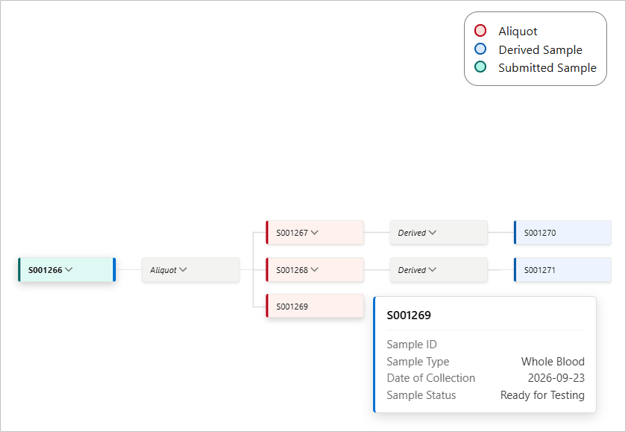
Lockbox LIMS enables laboratories to create clear relationships between samples, making it easy to trace how each sample is connected throughout the laboratory workflow. Users can generate child samples, such as derived samples or aliquots, while maintaining a direct link to the original parent sample. This complete chain of custody provides full visibility into each sample’s history and supports accurate tracking throughout its lifecycle.
As shown below, Lockbox’s Sample Hierarchy Visualizer provides an intuitive, graphical view of these sample relationships by displaying a family tree of connected sample records. Users can quickly trace sample lineage, navigate parent-child relationships, and organize samples using color-coded visualizations based on configurable picklist fields, such as Record Type and Sample Type. This makes it easy to understand complex sample hierarchies at a glance, while improving traceability and simplifying laboratory workflows.
Lockbox LIMS also streamlines laboratory workflows by automatically creating raw material records when protocols are completed. As shown in the screenshot below, protocols can be configured to reflect your lab’s specific procedures, testing steps, and material requirements, making it easier to standardize processes and maintain consistency.
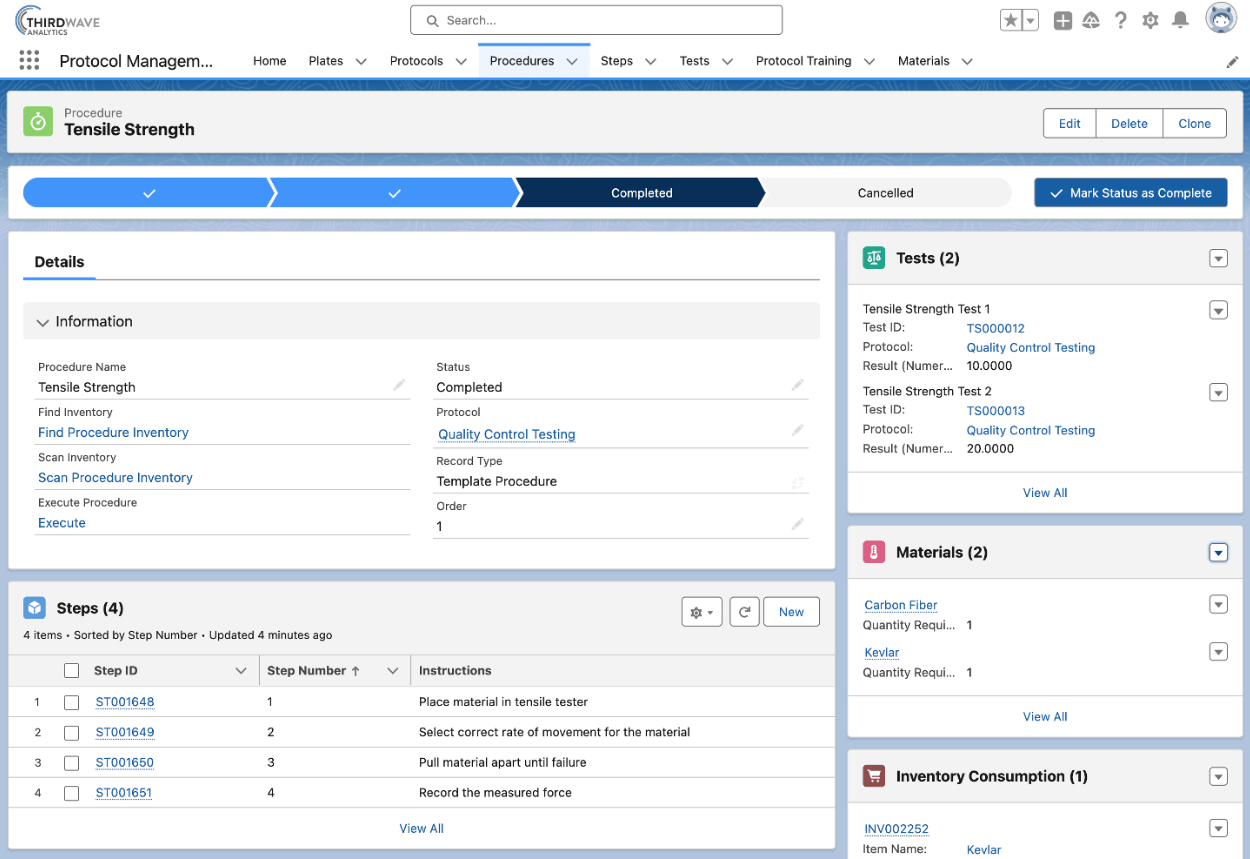
Samples can easily be assigned to batches when needed, allowing teams to run protocols on individual samples or entire groups of samples.
Once testing is complete, results can be quickly compiled into professional PDF reports directly from the LIMS dashboard and automatically distributed to the appropriate recipients. By connecting inventory management, testing workflows, and reporting in a single system, Lockbox LIMS helps laboratories improve efficiency while maintaining complete visibility into their operations.
In addition, Lockbox supports electronic signatures to help laboratories comply with the electronic records and signatures requirements of 21 CFR Part 11 in the United States and EU Annex 11. At critical points in a workflow, such as approving test results or signing reports, Lockbox can be configured to require users to re-enter their username and password before completing the action. This additional layer of authentication helps ensure that electronic signatures are secure, attributable, and fully auditable. For organizations that use external document approval workflows, Lockbox can also integrate with third-party electronic signature platforms, such as DocuSign.
2. Audit Trail Management
During an inspection, auditors often want to know who made a change, when it was made, and why. Without a reliable audit trail, answering those questions can be difficult.
A comprehensive lab information management system can automatically generate an immutable, time-stamped record of every action performed within the system. This capability is critical for GMP compliance, as it safeguards data integrity, strengthens personnel accountability, and provides reliable evidence during audits and regulatory inspections.
Lockbox LIMS offers a powerful feature called the Field Audit Trail. The Field Audit Trail logs the user, timestamp, original value, and updated value for every data field modification, providing a complete and auditable record of changes. This allows users assigned with proper permission to fully review a data record (e.g., a sample record) and determine every action ever taken within that record. If there were any errors, the original values can be quickly restored. This level of visibility ensures complete traceability by capturing what was changed, when the change occurred, and who made it.
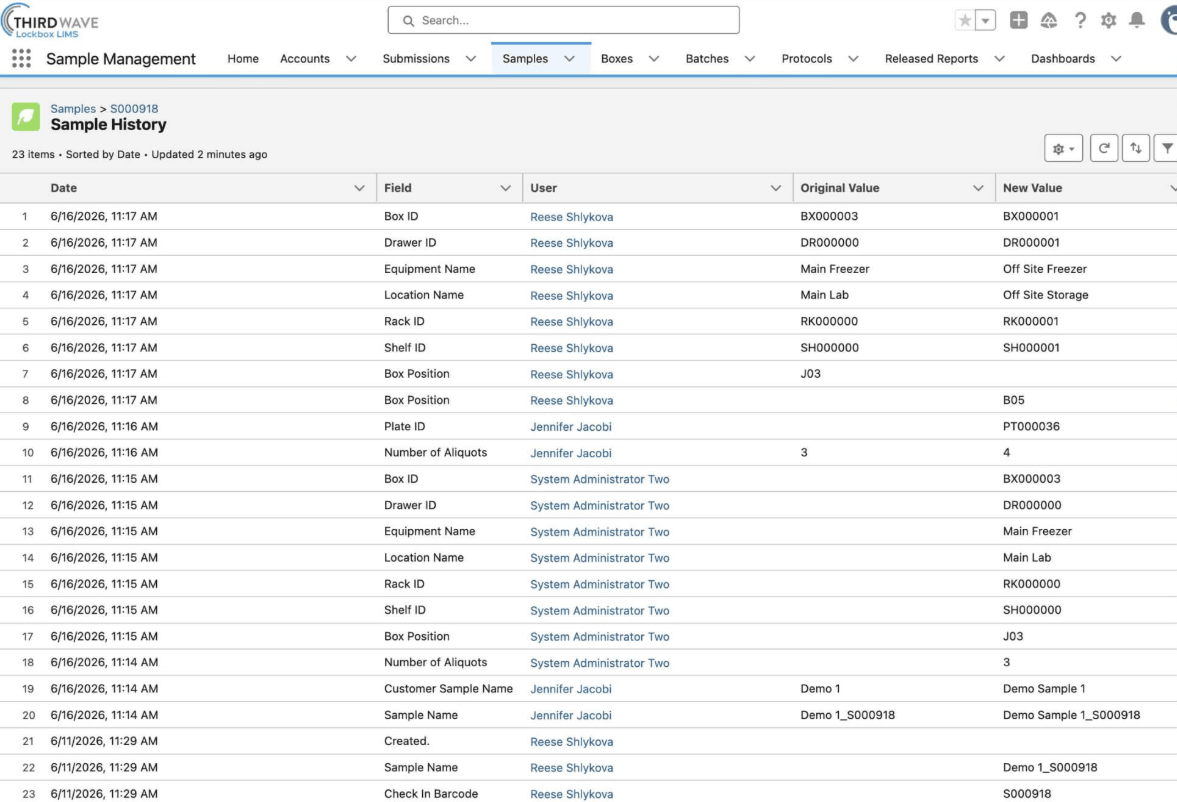
The Field Audit Trail is one of the most valuable features within Lockbox LIMS for supporting data integrity and regulatory compliance. By automatically tracking changes to records, it helps laboratories maintain transparent, audit-ready records while reducing the administrative burden associated with manual documentation and recordkeeping.
3. Standardized Workflows
Consistency is a major component of GMP compliance.
GMP LIMS software helps standardize laboratory operations by automating SOP-driven workflows, enforcing approved testing procedures, and guiding users through validated methods. By reducing process variability and minimizing manual errors, a LIMS promotes consistency across laboratory activities.
Lockbox LIMS guides users through approved procedures and enforces predefined workflows for activities such as sample processing, testing, review, and reporting. Rather than relying on manual processes or individual interpretations of SOPs, laboratory staff follow structured, repeatable workflows built directly into Lockbox. This helps reduce variability, minimize errors, and ensure that critical steps are completed in the correct order.
Lockbox helps laboratories incorporate quality control directly into their everyday workflows. Review and approval steps can be built into the testing process for samples, products, requests, and data, helping ensure that information is reviewed and verified before results are finalized or released. These built-in checkpoints help laboratories maintain consistency, reduce the likelihood of errors, and ensure that only approved information moves forward.
Lockbox LIMS can also be configured to automatically flag results that fall outside established quality limits. Instead of uncovering potential issues during a later review, laboratory staff are notified immediately and can begin investigating right away.
Catching problems earlier in the process helps prevent inaccurate results from progressing through the workflow, while supporting data quality and ongoing compliance efforts.
4. Quality Event Tracking
Effective Deviation and CAPA (Corrective and Preventive Action) management is a foundational, mandatory requirement for sustained GMP compliance.
Managing deviations and CAPAs in spreadsheets can quickly become difficult, especially when multiple departments are involved. A laboratory information management system helps organizations manage deviations and CAPAs more effectively by centralizing quality records and automating key workflows. Instead of relying on manual processes and spreadsheets, teams can track investigations, corrective actions, approvals, and effectiveness checks in one system. This improves visibility, reduces the potential for human error, and supports ongoing compliance efforts.
The Lockbox QMS Quality Events module provides a centralized platform for tracking, investigating, reviewing, and implementing CAPAs, while monitoring their effectiveness over time. With comprehensive reporting and real-time visibility, quality teams can quickly assess the status, progress, and resolution of quality events, ensuring issues are addressed promptly and thoroughly.
The Lockbox QMS Quality Events module enables laboratories to track the lifecycle of each CAPA from initiation through closure. Users can monitor open and closed CAPAs, measure the time required to resolve quality events, and identify trends that may impact operational performance. Detailed root cause tracking allows organizations to associate CAPAs with specific team members, procedures, samples, plates or batches, and reagents, providing complete traceability throughout the investigation process.
To support continuous improvement, the Lockbox QMS Quality Events module allows users to document target completion dates and define verification methods to evaluate the effectiveness of corrective actions.
As shown in the screenshot below, each stage of the CAPA process—including the description, action plan, review, and closure—can be routed through configurable approval workflows to ensure proper oversight and accountability. Laboratories can also connect one or more deviations directly to a CAPA, creating a clear link between quality events and corrective actions.
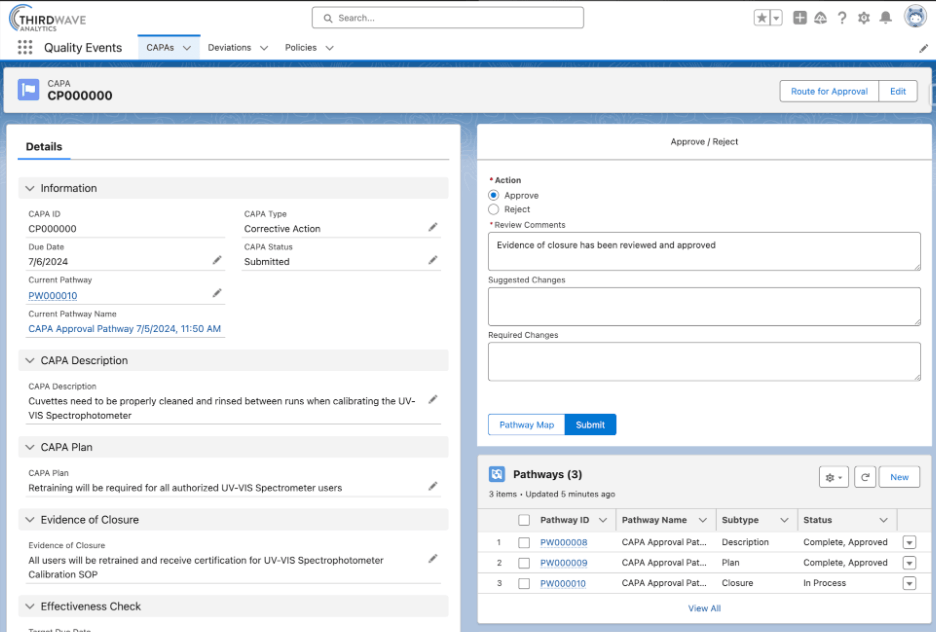
Adding the Lockbox QMS Document Control and Training modules further strengthens compliance by ensuring that updated procedures and required training activities are seamlessly connected to the CAPA process.
5. Better Document Management
Laboratory document management is strictly governed by GMP to ensure test results are reliable, defensible, and reproducible.
By replacing manual record-keeping with controlled digital processes, a comprehensive LIMS helps improve document traceability and reduce the risk of errors. Every document revision, approval, and user action can be tracked, creating a clear history of changes and making it easier to retrieve records during inspections and audits.
When an SOP is revised, everyone needs access to the correct version. The Lockbox QMS Document Control module provides a centralized, secure repository for managing controlled documents throughout their entire lifecycle and helps eliminate confusion by maintaining a single source of truth for quality documents. Authorized users can quickly search for and retrieve documents, view current and historical versions, track revision histories, and review detailed audit trails that record document changes and visibility.
By maintaining all quality documents in a single location and restricting unauthorized access, organizations can ensure that employees are always working from the most current approved version, while preserving a complete record of previous revisions and associated comments.
In addition to document storage and version control, the Lockbox QMS Document Control module streamlines the review and approval process through automated document workflows. As shown in the screenshot below, controlled documents can be routed through configurable review, approval, distribution, and revision pathways tailored to the organization’s requirements.
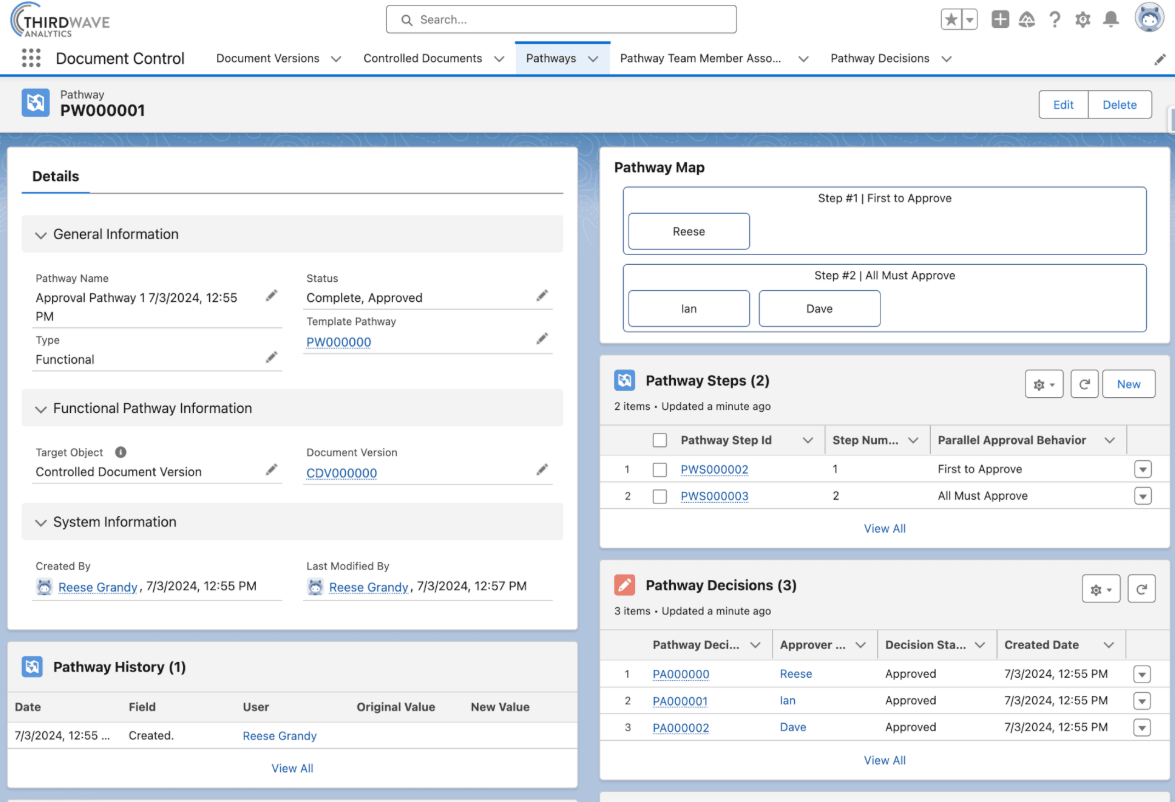
Automated notifications keep reviewers informed when action is needed, while the system captures approval comments, records who reviewed and approved each document, and maintains historical versions for audit purposes.
Integration with Lockbox LIMS QMS Document Control module further strengthens compliance by ensuring that only approved documents are available for use within laboratory workflows, helping organizations maintain consistency, accountability, and regulatory readiness.
6. Training Management
Employee training is a critical component of GMP. Laboratories must maintain accurate training records, ensure staff qualifications are current, and verify that personnel are only performing procedures they are authorized and trained to complete.
Imagine that an auditor asks for the training record of an analyst who performed testing six months ago. With a comprehensive LIMS, that information can be retrieved in seconds rather than searching through spreadsheets, emails, and paper files.
The Lockbox QMS Training Management module provides a centralized location for managing employee training records, qualifications, and certifications. By keeping all training documentation in one system, laboratories can more easily ensure that employees stay current on required training while giving managers quick access to records during audits and inspections.
Lockbox also helps laboratories ensure that personnel are only performing procedures for which they have been properly trained and qualified. Training records can be linked directly to laboratory activities, and access to specific protocols, equipment, or processes can be restricted until required training has been completed. This helps reinforce GMP requirements while reducing the risk of unauthorized or unqualified users performing regulated tasks.
To give managers greater visibility into employee qualifications, Lockbox provides Training Report Cards that display each team member’s training status in a single view, shown below. Managers can quickly see completed, pending, and overdue training requirements, review certifications and training history, track course participation, and view the protocols, equipment, and controlled documents associated with each employee. Having this information readily available makes it easier to manage training programs, identify gaps, and maintain audit-ready records.
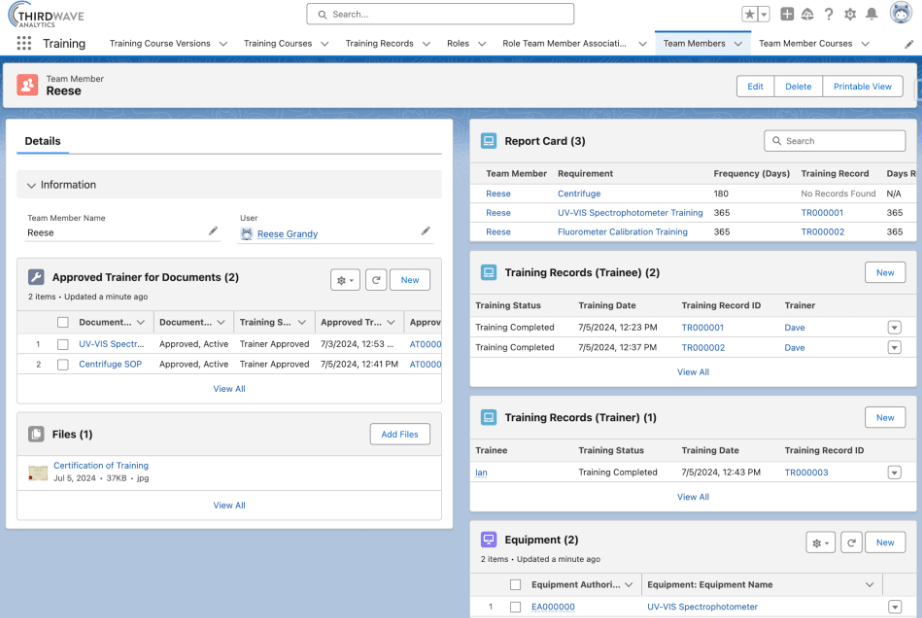
Keeping employee training records up to date can become challenging as laboratories grow, especially when training requirements vary by role and certifications need to be renewed regularly. Lockbox QMS Training helps simplify the process by automating training management and creating training plans based on each employee’s responsibilities. Laboratories can automatically assign required courses, designate approved trainers, track completion dates, and maintain a complete history of training activities in one centralized location. The system can also schedule recurring retraining requirements and send reminders for upcoming or overdue training, helping staff stay current and reducing the administrative burden on managers.
Automated training management strengthens GMP compliance and audit readiness. During inspections, laboratories must be able to demonstrate that employees have been properly trained and are qualified to perform their assigned tasks. With all training records stored electronically, laboratories can quickly access documentation showing who completed specific training, when it was completed, and whether any certifications or retraining requirements are outstanding. This makes it easier to provide auditors with the information they need while helping ensure that only qualified personnel are performing regulated laboratory activities.
7. Equipment Management
When an auditor asks for the maintenance history of a critical instrument, laboratories need to be able to produce that information quickly. Keeping calibration records, service logs, and equipment qualifications organized can become difficult when they’re spread across spreadsheets and filing cabinets. This is where a LIMS can help.
A comprehensive LIMS helps keep these activities organized by tracking maintenance records, calibration schedules, and equipment qualifications, making it easier to demonstrate compliance during audits and inspections.
The Lockbox Instrument Management module helps laboratories manage the complete lifecycle of their instruments while providing the documentation and traceability needed to support compliance efforts.
Teams can track instrument uptime and downtime, schedule preventive maintenance and calibrations, and maintain a complete history of service activities, including both routine maintenance and unexpected repairs. Automated notifications help ensure that important maintenance tasks are not overlooked by alerting staff when service is due, an instrument is unavailable, or a calibration date is approaching.
The module also helps laboratories stay organized by centralizing important instrument information in one location. As shown in the screenshot below, users can store equipment specifications, software and firmware versions, calibration records, manuals, and other supporting documentation on the instrument record. Instrument reservations can be managed through a shared calendar, helping teams coordinate usage and maximize equipment availability.
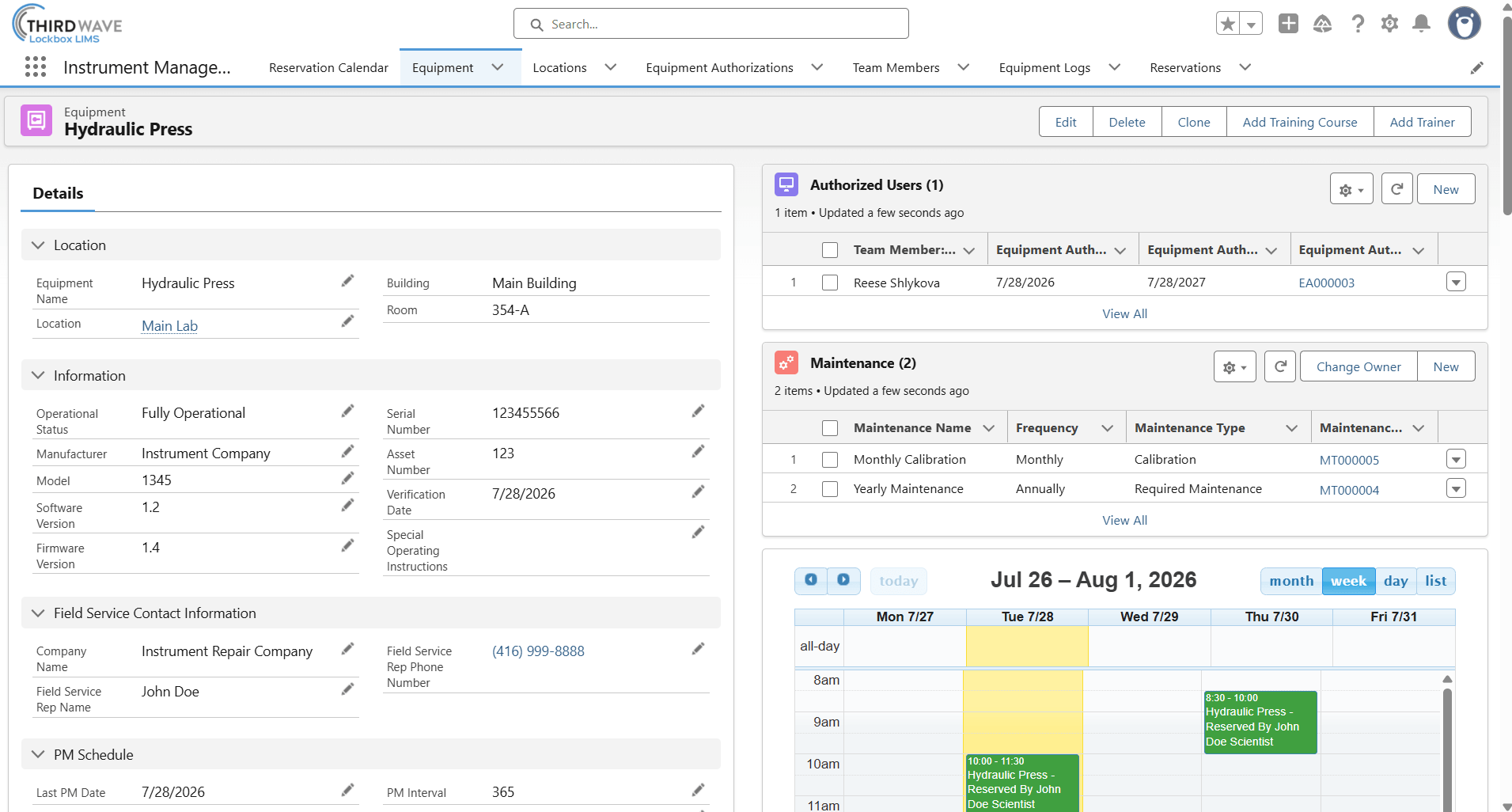
For laboratories with connected instruments, Lockbox LIMS can interface directly with equipment to automate data transfer and reduce manual data entry. This not only improves efficiency but also helps minimize transcription errors and strengthen data integrity. In addition, laboratories can restrict instrument access to authorized and trained personnel and maintain traceability by linking instruments to specific protocols, procedures, and laboratory workflows.
By bringing instrument maintenance, scheduling, documentation, and data management together in a single system, Lockbox LIMS helps laboratories improve operational efficiency while supporting GMP compliance requirements.
Conclusion
GMP compliance touches nearly every aspect of laboratory operations, from sample management and quality control to document management, training, and equipment maintenance. Keeping all of these processes organized and audit-ready can be challenging, especially as laboratories grow and regulatory requirements become more demanding.
Lockbox LIMS helps simplify compliance by bringing critical laboratory data, workflows, and quality processes into a single system. With greater visibility, automation, and traceability, laboratories can spend less time managing compliance requirements and more time focusing on delivering accurate, reliable results.
Ready to simplify GMP compliance in your laboratory?
Discover how Lockbox LIMS can help your laboratory streamline quality processes, improve traceability, and stay audit-ready. Schedule a personalized demo to see how Lockbox can support your unique workflows and regulatory requirements.
Written by Kim Waters and Dave Gebhart
Kim Waters is a Sales and Marketing Associate at Third Wave Analytics. She holds a Bachelor of Science in Business Administration from Coastal Carolina University and brings nearly 18 years of experience in the LIMS industry.
Throughout her career, Kim has specialized in creating educational content that helps laboratories evaluate, implement, and maximize the value of LIMS solutions. Previously serving as a Content Experience Manager and Lead Product Specialist, she has developed technical documentation, product marketing materials, customer case studies, and thought leadership content focused on laboratory operations, digital transformation, and regulatory compliance. Her experience provides a strong understanding of the challenges manufacturing laboratories face and how a LIMS software supports GMP standards, quality management, and operational efficiency.
Dave Gebhart is the Director, Product Management at Third Wave Analytics, where he helps shape the development of Lockbox LIMS to meet the evolving needs of modern laboratories. He holds a degree in Bioengineering from Olin College and brings more than 12 years of hands-on experience in the biotechnology industry.
Throughout his career, Dave has worked across laboratory management, antibody diagnostics, induced pluripotent stem cell (iPSC) manufacturing, and tissue culture. He has also led quality teams from startup laboratory operations through CAP accreditation and is a Salesforce Certified Administrator. Dave has played a key role in the design and development of the Lockbox QMS modules, helping laboratories digitize and strengthen quality processes such as document control, training management, deviation and CAPA management, audits, and change control. Drawing on his laboratory, quality, and technology expertise, Dave helps laboratories implement LIMS solutions that streamline operations, improve quality management, and support GMP compliance and other regulatory requirements.
It’s time to explore how Lockbox LIMS can work for you and allow you to return your focus to science.