How a LIMS Improves Lab Collaboration

Why Does Lab Collaboration Matter More Than Ever?
As laboratory operations become increasingly complex, effective collaboration is more critical to success than ever before. However, many laboratories still rely on disconnected tools such as emails, spreadsheets, and shared drives—systems that can slow communication, limit visibility, and create data silos.
A Laboratory Information Management System (LIMS) changes that.
With the right LIMS collaboration tools, labs can centralize communication, streamline workflows, and ensure every team member stays aligned in real time.
What is LIMS Collaboration?
LIMS collaboration refers to the ability to manage communication, files, tasks, and workflows within a single laboratory information management system.
Instead of switching between multiple platforms, a LIMS software solution enables:
- Real-time communication across lab teams
- Centralized document and data sharing
- Task and workflow management
- Seamless collaboration with external partners
This creates a more efficient and connected lab environment.
Key LIMS Features that Enable Seamless Collaboration
Modern LIMS software—such as Lockbox LIMS—includes a wide range of built-in collaboration tools designed to improve productivity and transparency.
1. Real-Time Lab Communication
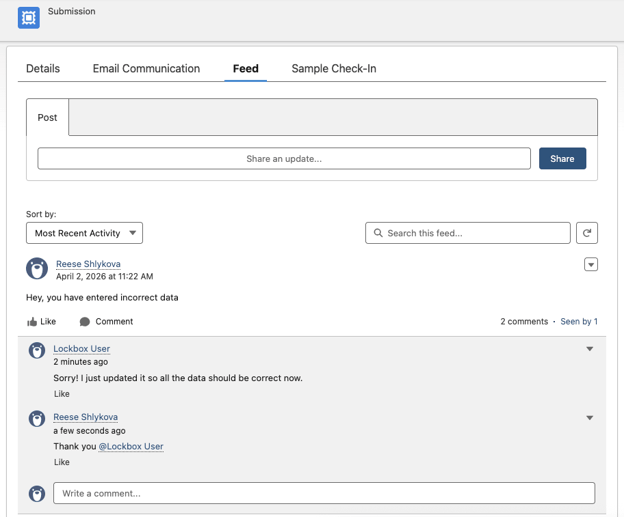
Collaborate with your team in real time using built-in communication tools.
- Share updates across lab teams
- Collaborate in Lab Chatter or Slack groups
- Track activity on samples, studies, boxes, workflows
This social-style communication keeps everyone informed without relying on email chains.
2. Centralized File Sharing and Document Management
A LIMS document management capability ensures all files are accessible and organized.
- Post files to feeds and records – in any format
- Share files with collaborators in the Lockbox cloud
- Sync files between your local system and Lockbox LIMS
This eliminates version control issues and improves data accessibility.
3. Integrated LIMS Email for Better Communication Tracking
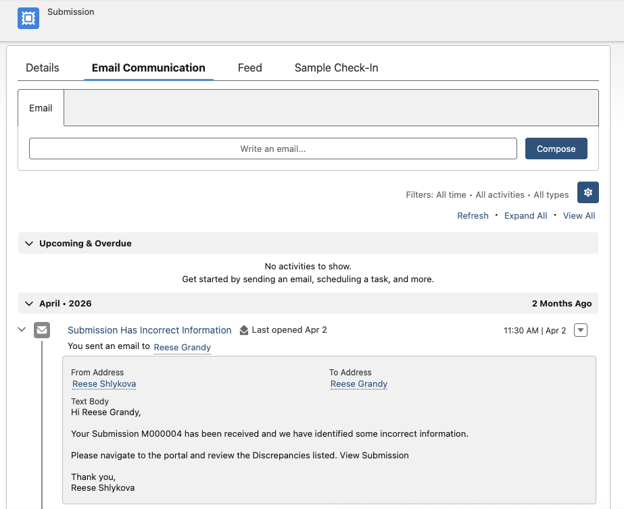
With LIMS email integration, labs can manage communication without leaving the platform.
- Send emails directly from Lockbox LIMS
- Use email templates for consistent messaging
- Track inbound and outbound email in Lockbox LIMS, so that you have a complete 360 degree view of all your team’s communication with customers, PI’s, and collaborators
- Maintain a complete communication history
This creates an audit trail for collaboration with internal teams and external stakeholders.
4. External Collaboration with a Customer Portal
Collaborating outside your organization is just as important as internal coordination.
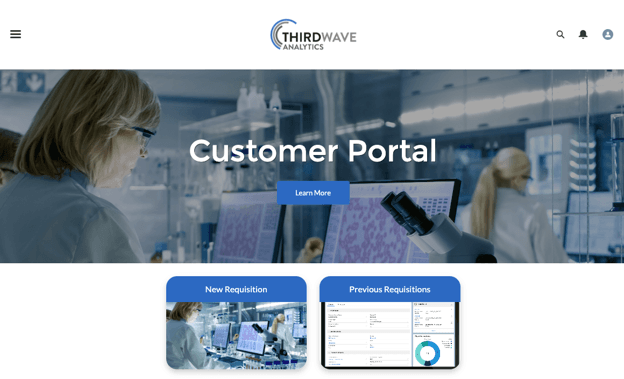
A LIMS Customer Portal allows you to:
- Share data with external researchers, CROs, and partners
- Provide secure, role-based access
- Use easy point-and-click branding tools or Visualforce to create branded collaboration spaces
This ensures secure and efficient external collaboration.
5. Task and Activity Management
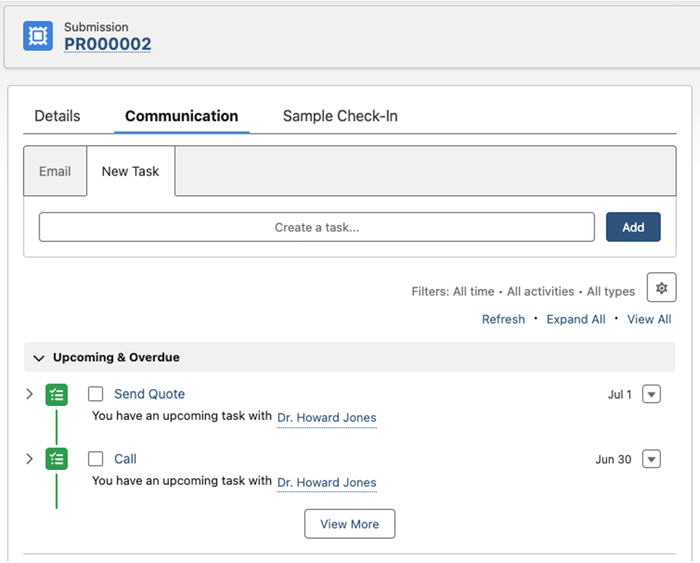
Effective collaboration depends on clear task ownership, prioritization, and visibility across laboratory workflows. Lockbox LIMS provides tools designed to help laboratories maximize productivity and keep projects on track.
With Lockbox LIMS workflow management tools, laboratories can:
- Track laboratory meetings, research tasks, studies, and project activities in one centralized system
- Organize both events and tasks into easy-to-manage lists and reports
- Prioritize responsibilities and maintain visibility across ongoing workflows
- Manage to-do lists related to research studies, participants, papers, and samples
- Quickly create and update tasks to improve efficiency
- Use prefiltered task lists to focus on high-priority activities
- Receive task notifications and reminders to help ensure deadlines and milestones are met
This keeps research projects on track and improves accountability.
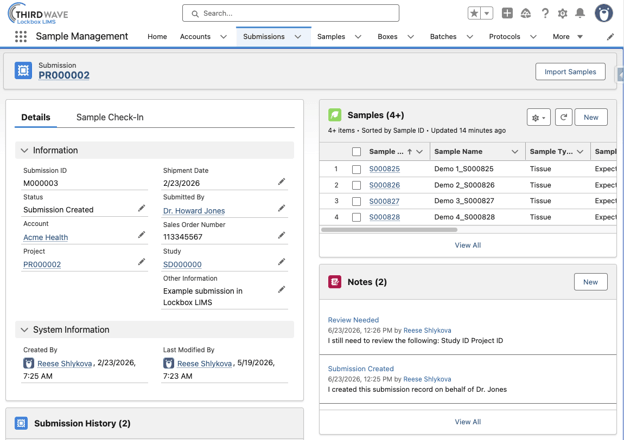
6. Notes and Data Annotation
Keep all critical insights tied directly to your data.
- Add notes to samples, participants, visits, protocols, storage, etc.
- Document observations and updates in real time
- Ensure important context is never lost
This enhances traceability and knowledge sharing.
7. Calendar and Event Tracking
Coordinate schedules and meetings within your laboratory management system.
- Track lab meetings and project milestones with collaborators, P.I’s, and lab staff members
- Drill down from events to related records, feeds, files, contracts, and more
- Track events in reports
This improves planning and team coordination.
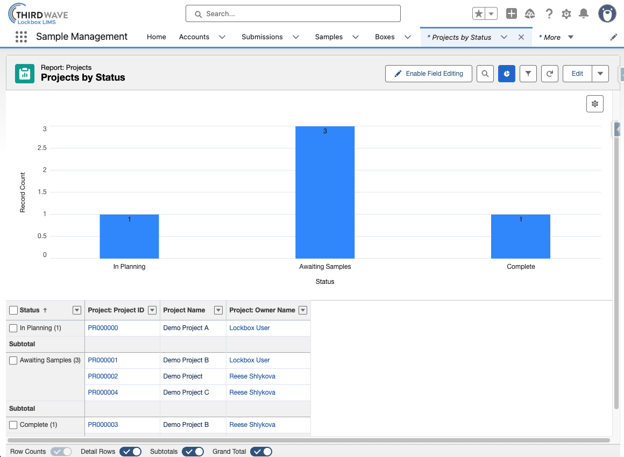
8. Reporting and Visibility Across Lab Activities
Gain insights into collaboration and productivity with built-in reporting tools.
- Generate activity and task reports
- Track project progress in real time
- Monitor collaboration across teams
Better visibility leads to better decision-making.
9. Integration with Microsoft and Google Tools
A modern LIMS software platform integrates with the tools your team already uses.
- Microsoft Outlook, Word, and Office tools
- Gmail and Google Workspace
- Google Calendar
These integrations enhance usability and reduce workflow disruption.
Why a LIMS Is Essential for Modern Laboratory Collaboration
As labs become more data-driven and distributed, traditional collaboration methods fall short.
A LIMS provides:
- Centralized collaboration tools
- Real-time workflow visibility
- Secure data sharing
- Integrated communication
This makes LIMS software a critical component of any modern lab’s digital infrastructure.
Conclusion
Seamless collaboration is no longer a “nice-to-have”—it’s a requirement for efficient, high-performing labs.
By leveraging LIMS software for lab collaboration, your team can:
- Stay aligned across projects
- Improve productivity and communication
- Reduce errors and delays
- Accelerate research outcomes
Contact us and book a demo to see how Lockbox LIMS can enhance collaboration in your laboratory.
It’s time to explore how Lockbox LIMS can work for you and allow you to return your focus to science.