LIMS for Pharmaceutical Stability Studies: Improve QC Efficiency, Compliance, and Data Integrity

What could one missed stability sample cost your laboratory?
If you’ve managed a pharmaceutical stability study using spreadsheets or paper logs, you know how quickly even a well-planned study can spiral. Hundreds or thousands of samples must sit under controlled environmental conditions, each on its own testing schedule that can run for months or years. Miss a pull date, lose track of a sample, or log a result incorrectly, and the whole study can be delayed or trigger a costly investigation.
That’s why many QC laboratories are moving stability study management off spreadsheets and into a Laboratory Information Management System (LIMS).
What Are Pharmaceutical Stability Studies?
Stability studies evaluate how a product’s identity, strength, quality, purity, and performance hold up over time under defined storage conditions. They determine shelf life, expiration dating, storage requirements, and packaging effectiveness and regulators like the FDA and ICH require complete documentation throughout. Since many stability programs run 12, 24, or even 60 months, the documentation burden compounds fast as product and batch counts grow.
Where Manual Tracking Breaks Down
Missed pull dates: A single protocol might call for testing at initial, 1, 3, 6, 9, 12, 18, 24, and 36 months. Multiply that across dozens of products and several storage chambers, and manually tracked pull dates start slipping.
Lost sample locations: Samples are often spread across chambers, refrigerators, freezers, and warehouse storage. Without centralized tracking, finding the right sample means digging through paper logs or spreadsheets.
Multiple concurrent conditions: Most products need simultaneous testing under long-term, accelerated, intermediate, refrigerated, and frozen conditions each adding its own layer of scheduling complexity.
Documentation errors: Manual transcription invites incorrect sample IDs, missing data, duplicate entries, and incomplete audit trails exactly the gaps that turn into inspection findings.
How a LIMS Fixes This
Instead of maintaining separate spreadsheets for sample dates, paper logs for sample locations, and disconnected systems for testing and reporting, a configurable LIMS centralizes every stage of the stability study in one platform.
Full sample traceability: Maintain complete visibility into every stability sample throughout its lifecycle. Track batch and lot numbers, product information, study assignments, chamber locations, chain of custody, and derived aliquots from receipt through final disposition. Quickly locate samples and follow individual lots as they progress through different storage conditions, orientations, and testing intervals all from a single system.
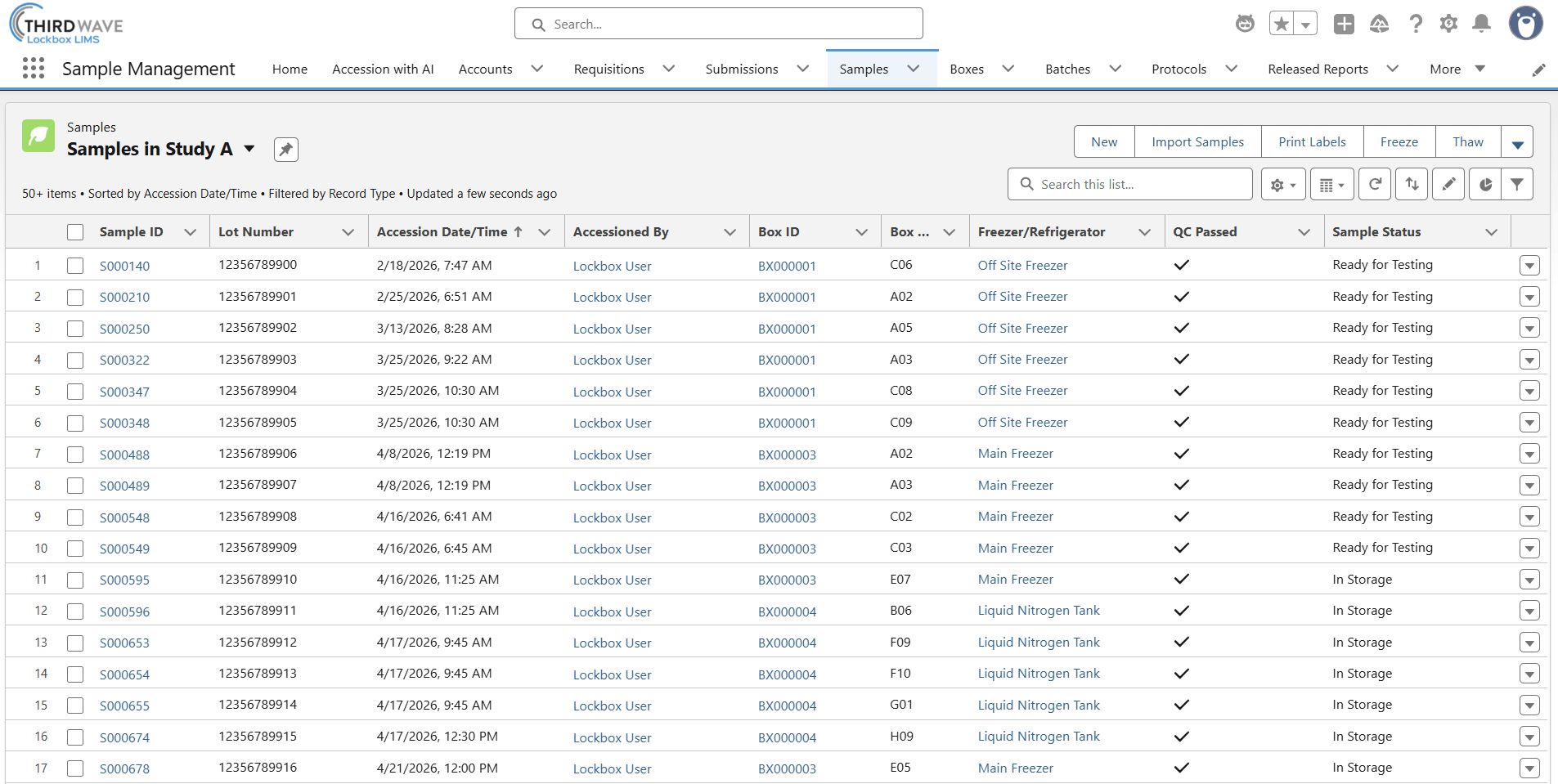
Figure 1: Queue of samples in Lockbox LIMS for a particular study with IDs, lot numbers, chain of custody details, location information, and status tracking.
Standardized testing workflows: As pull dates arrive, analysts get assignments directly in the system with results, calculations, specification checks, and approvals all captured in one place instead of being re-entered across multiple tools.
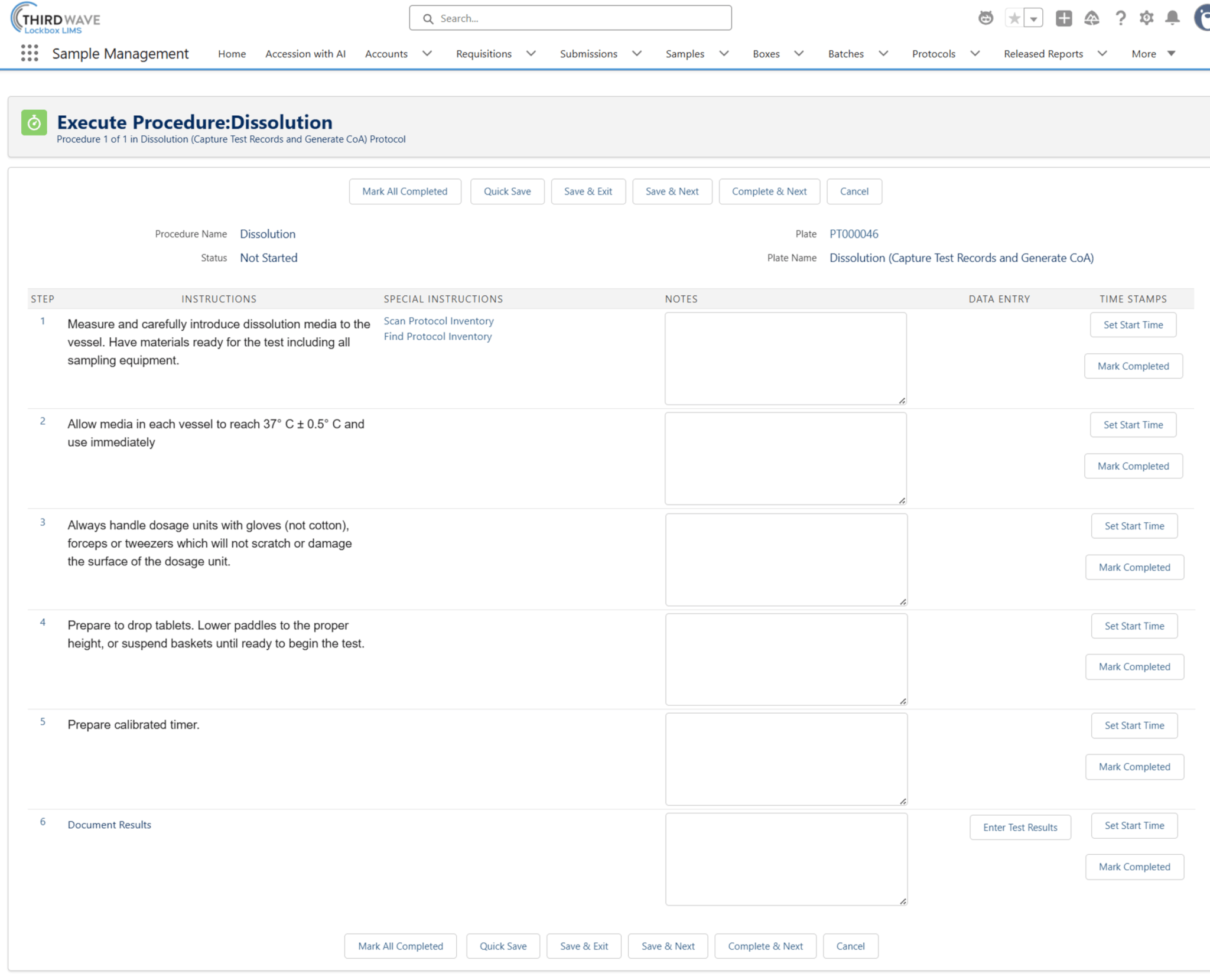
Figure 2: Example of a protocol in Lockbox LIMS used to test Stability Study samples.
Compliance support: Audit trails, e-signatures, role-based security, controlled workflows, and change control give labs what they need to demonstrate GMP compliance and prepare for inspections efficiently.
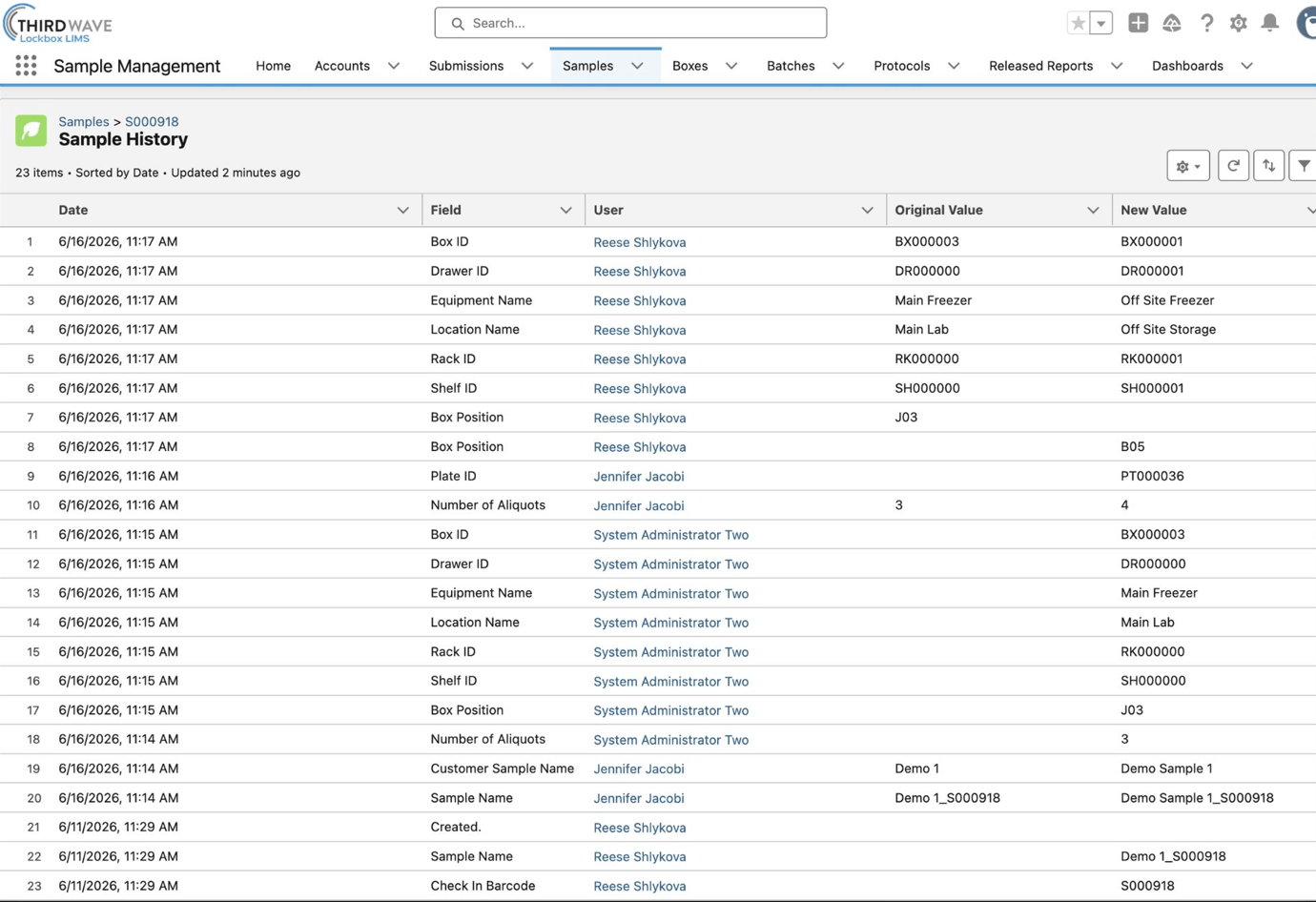
Figure 3: The Lockbox LIMS Sample History Audit Trail provides complete traceability throughout the sample lifecycle while supporting quality management, regulatory compliance, and data integrity.
Automated pull scheduling: The system generates future pull dates directly from the study protocol, giving labs advanced visibility into upcoming workload instead of relying on manually maintained calendars.
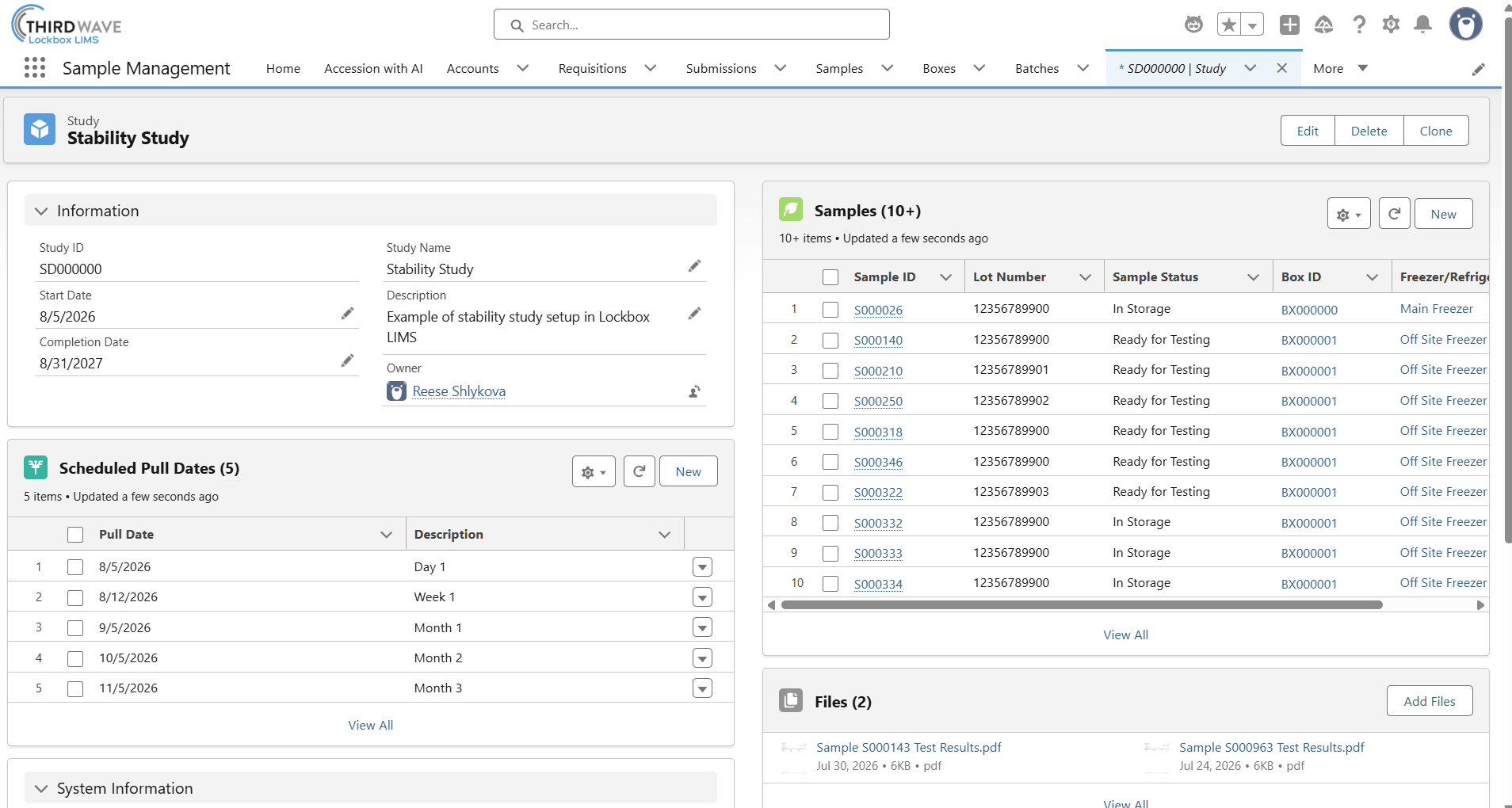
Figure 4: Stability Study setup in Lockbox LIMS with scheduled pull dates, samples, and files stored in one place.
Task assignment: Auto-assign upcoming workloads and test requests to specific analysts or instruments.
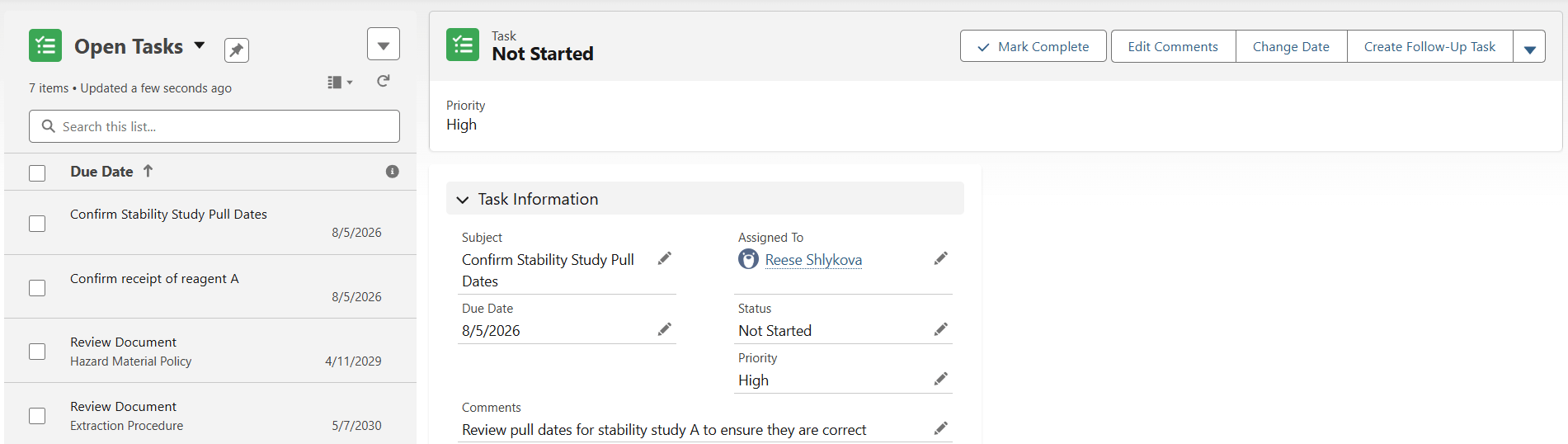
Figure 5: Task assignment in Lockbox LIMS with status, priority, and due dates.
Environmental and chamber management: Studies stay organized by temperature, humidity, chamber, storage condition, and testing interval, with even tighter visibility when integrated with chamber monitoring systems.
Inventory alerts: Configure automated email notifications and dashboard alerts for important inventory events, stability workflows, and other laboratory activities. When integrated with monitoring systems, alerts can also notify users of equipment issues or chamber parameter deviations.
OOS/OOT detection: Automatically flag Out-of-Specification (OOS) or Out-of-Trend (OOT) results against predefined criteria.

Figure 6: Queue of test results in Lockbox LIMS that were marked as out of specification.
Real-time reporting: Reports and dashboards show study progress, upcoming pulls, completed testing, stability trends, OOS results, and chamber utilization without manually compiling data from multiple spreadsheets.
Why Flexibility Matters
Every laboratory runs stability studies differently. Commercial manufacturing, clinical development, contract testing, and combination products each come with different protocols and approval workflows.
A configurable LIMS adapts to how a lab already works, rather than forcing teams to redesign their SOPs around the software.
How Lockbox LIMS Supports Stability Studies
Lockbox LIMS is built around that flexibility. Rather than locking labs into a rigid stability module, it configures study workflows, sample records, and approval chains to match existing SOPs so teams don’t have to change how they work in order to get the benefits of a LIMS.
With Lockbox LIMS, pharmaceutical QC labs can:
- Configure stability protocols and sample time point schedules to match their own study designs
- Track full chain of custody and sample history across chambers and storage conditions
- Maintain audit trails and electronic signatures in support of GMP and 21 CFR Part 11
- Generate real-time dashboards on study progress and lab performance
- Integrate with instruments, ERP systems, and other lab applications already in use
Conclusion
As pharmaceutical pipelines grow and regulatory expectations continue to increase, stability programs become increasingly difficult to manage using spreadsheets alone. A modern, configurable LIMS helps laboratories automate scheduling, maintain complete traceability, improve inspection readiness, and scale stability programs without adding administrative burden. By adapting to existing workflows rather than forcing new ones, Lockbox LIMS enables pharmaceutical QC laboratories to manage even the most complex stability studies with confidence.
It’s time to explore how Lockbox LIMS can work for you and allow you to return your focus to science.